The Studio Magic: Transforming Reality into Masterpiece AI Anime with Style Transfer
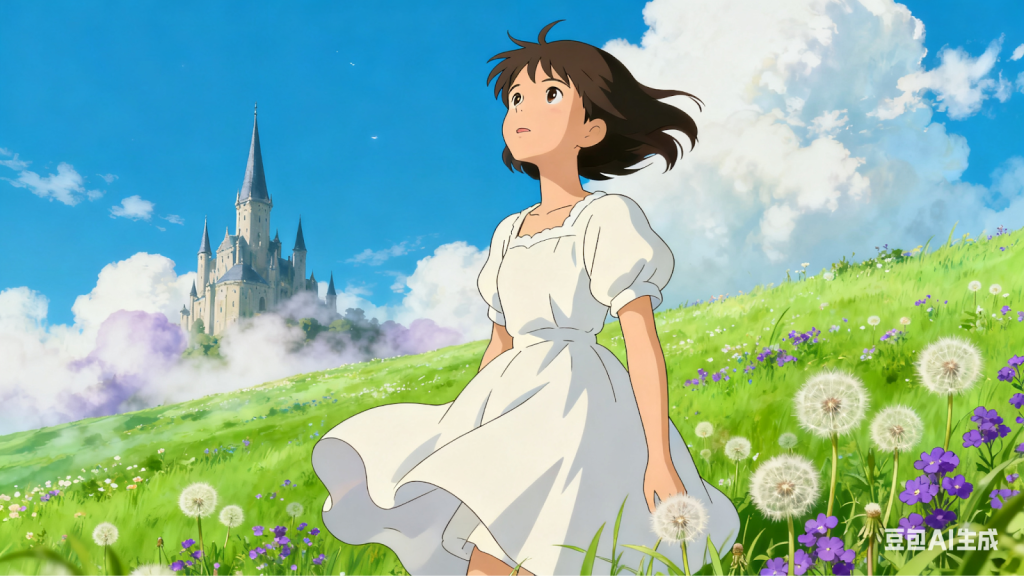
Beyond Filters—The Art of Photographic AI Anime Transformation
The dream of stepping into an animated world, particularly the soft, nostalgic aesthetic of Studio Ghibli, is now a digital reality. AI anime is pioneering a creative revolution, allowing users to transform personal photos, landscapes, and even video footage into specific artistic styles. This post delves into the technical magic behind advanced AI anime style transfer, exploring the tools and techniques that allow anyone to create high-quality, personalized animation. We will uncover the best practices for achieving perfect AI anime conversion and discuss the future of personalized animated media. Furthermore, we will examine the rising trend of using realistic photo to anime tool platforms for generating unique digital art collections.
The Core Technology: How AI Anime Learns an Aesthetic
To achieve the nuanced, hand-drawn look of specific animation houses, AI anime relies heavily on sophisticated deep learning models, primarily neural style transfer and conditional Generative Adversarial Networks (cGANs).
A basic photo filter applies simple color and texture overlays. In contrast, true AI anime transformation learns the rules of the style. For a Ghibli-inspired conversion, the model analyzes thousands of Ghibli frames—learning the watercolor-like skies, the characteristic character proportions, the lush, saturated greens, and the soft lighting—to create a comprehensive style vector. When you input a photo, the AI anime system applies these learned stylistic rules at a structural level, modifying lines, edges, and color palettes fundamentally.
This process transforms the very content of the original image, not just its surface. Understanding this core mechanism is the first step to becoming a master of AI anime creation. The fidelity of these transformations is directly proportional to the complexity of the training data used by the realistic photo to anime tool.
The Role of Deep Learning in Aesthetic Dissection
The success of AI anime style transfer lies in its ability to separate content from style. Convolutional Neural Networks (CNNs) are employed in two key stages. The content network focuses on preserving the structural elements of your input photo (the layout of the face, the placement of buildings), while the style network extracts the texture, color histogram, and brushstroke patterns from the target anime style. The AI anime algorithm then harmoniously recombines the structure of your photo with the aesthetics of the anime, often achieving a level of detail that mimics traditional cell animation. This deep aesthetic dissection is why a simple realistic photo to anime tool can produce results that look genuinely hand-drawn, rather than merely filtered. The models are constantly evolving, leading to more accurate and less “artefact-laden” AI anime outputs over time.
From Selfie to Senpai: The AI Anime Style Transfer Workflow
Creating your own AI anime masterpiece involves a specific workflow optimized for best results. This process leverages several key long-tail keywords associated with the field:
1. Source Image Preparation (realistic photo to anime tool)
The quality of your output AI anime is directly linked to the quality of your input photo. Use high-resolution images with clear subjects and well-defined light sources. Overly busy backgrounds or poor lighting confuse the AI anime model. If the goal is a character portrait, a close-up photo works best for AI anime character generation. Furthermore, for a realistic photo to anime tool to work effectively, ensure your input photo has minimal depth-of-field blur, as the AI often struggles to correctly interpret unfocused areas.
2. Selecting the Perfect Style (ghibli style photo converter)
The most crucial step in the AI anime process is selecting the specific style model. A specialized ghibli style photo converter is necessary to achieve that signature look. Different AI anime generators offer styles like Shonen action, shojo romance, or 90s classic style. Choose a style that matches the emotional tone of your source image. For instance, transforming a vibrant outdoor photo using a melancholic ghibli style photo converter might yield unexpectedly dramatic results, showcasing the model’s interpretative capabilities.
3. Fine-Tuning and Prompting (customize your anime avatar)
Even with style transfer, a text prompt can guide the AI anime model. For example, if you want your kitchen photo transformed into a rainy scene from My Neighbor Totoro, you might add the prompt: “lush green tones, soft rainfall, visible raindrops on glass.” Many AI anime tools also allow a small degree of customize your anime avatar adjustments, such as changing the color of the output character’s clothing or hair post-conversion, giving users precise control over the final AI anime outcome.
The Rise of Personalized AI Anime Avatars and Digital Identity
The ability to customize your anime avatar has deep implications for digital identity. Users are moving away from generic profile pictures and adopting unique, stylistically consistent AI anime representations of themselves. These personalized avatars, generated through an advanced realistic photo to anime tool, serve as digital proxies across social media, gaming, and the emerging Metaverse. The consistency in aesthetic—be it a ghibli style photo converter or a cyberpunk anime filter—allows individuals to curate their online presence with unprecedented artistic flair, making the AI anime avatar a modern status symbol. Furthermore, specialized AI anime platforms are allowing these avatars to be exported in various formats (e.g., layered PSDs or 3D models), ready for integration into virtual environments.
The Challenge of Video: Converting Footage to AI Anime (ai anime video generator)
Converting a single photo to AI anime is complex, but transforming video footage is exponentially harder. An ai anime video generator must ensure temporal consistency, meaning the stylistic elements must remain stable across every frame. If the style flickers or the character’s facial features jump between frames, the illusion is broken.
Advanced AI anime video generators use techniques like motion estimation and frame interpolation to lock the stylistic features to specific objects in the scene. This ensures that the transformed AI anime footage maintains the smooth, continuous look required for professional animation. This specialized area of AI anime development is driving significant innovations in video processing. The complexity means that ai anime video generator tools often require significantly more computational power and time compared to static image conversion.
The Future of Personalized Media: AI Anime Storytelling (create your own anime episode)
The technology underlying AI anime is leading directly into personalized, interactive media. Imagine an AI anime platform where you input a script, your friends’ photos, and a preferred style, and the system generates a short episode—this is the promise of create your own anime episode technology.
This application of AI anime goes beyond simple conversion; it incorporates narrative structure and character staging. This personalized content will define a new category of entertainment, blurring the lines between user, creator, and audience. The ability to instantly transform personal memories into high-quality AI anime narratives is a powerful tool for self-expression. The rise of these AI anime narrative engines suggests a shift where users become the directors and stars of their own animated series.
Ethical and Creative Implications of AI Anime (ai anime art copyright)
As AI anime tools become more proficient, important questions arise regarding intellectual property. When a model is trained exclusively on one studio’s art, does the output belong to the user, the AI company, or the original studio? The debate around AI anime art copyright is ongoing and crucial for the industry’s future.
For creators, AI anime is a powerful collaborator, allowing for rapid ideation and stylistic exploration. For consumers, it is an accessible way to engage with the art form. Navigating the ethical landscape while maximizing the creative potential of AI anime is the challenge of the next decade. Furthermore, the accessibility of AI anime tools raises concerns about deepfakes, necessitating the development of robust AI anime detection and watermarking technologies.
Conclusion: Mastering the AI Anime Aesthetic
The current generation of AI anime tools provides an unprecedented opportunity to blend reality with animation. By understanding the mechanisms of style transfer and perfecting your input, you can reliably generate stunning, personalized content. Whether you are using a simple realistic photo to anime tool or a complex AI anime video generator, the core magic lies in the AI’s ability to interpret and apply artistic rules. Start experimenting today and unlock the boundless creative potential of AI anime.